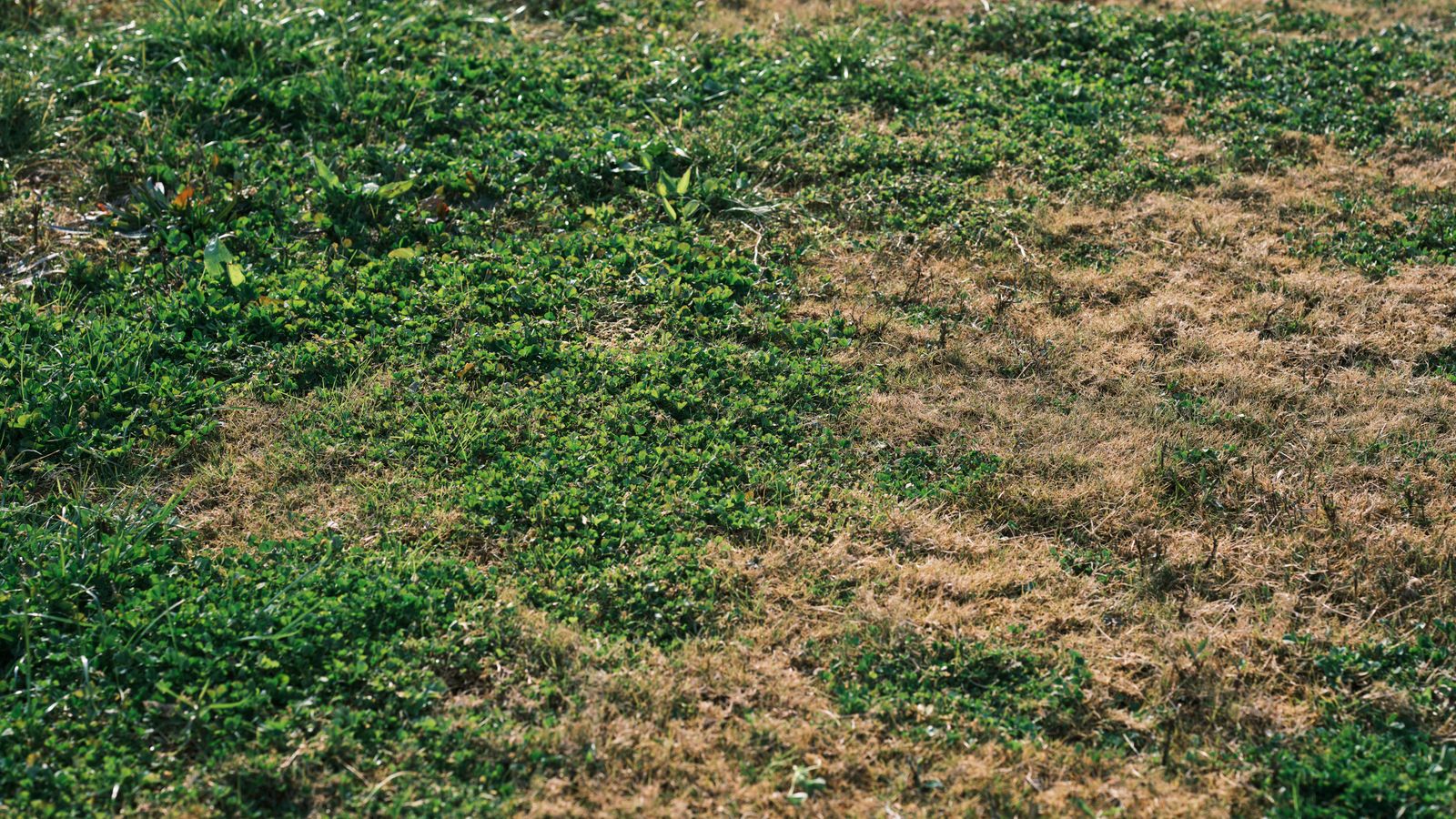
A customer called us this July with a fair question. The same corner of their backyard had gone brown at the same time of year, two summers running, and both times it happened a few weeks after one of our applications. They wanted to know if we had burned their lawn.
That is exactly the kind of question we want people to ask us. So we went out, pulled the records, walked the property, and worked the problem. Here is what we found, because the answer turns out to be true for a lot of West Metro backyards, not just this one.
The setup
This is a well-kept lawn owned by someone doing everything right. Our notes and the homeowner's own routine covered all the usual suspects:
- Mower blades sharp, with no tearing on the leaf tips
- Clippings bagged, minimal thatch
- Core samples showing black dirt down to five inches
- Aerated, overseeded, and treated with a microbial soil amendment in May
- Watering early in the morning, two to three times a week, with the system shut off when rain was in the forecast
- No dogs, so no urine spots
The front yard was flawless. Better still, we treat the neighbor's lawn too, right on the other side of the fence, same products, same crew, same day. Their grass showed nothing. One backyard had a problem and everything around it was fine.
Ruling out our own application first
When a customer asks whether we caused something, we check that before anything else. Both lawns got the identical treatment in late June: a 28-0-9 fertilizer with seven percent iron, a standard broadleaf weed control package, and grub control. If the blend or the rate were the problem, the neighbor's lawn would have shown it too. It did not.
There was one spot worth admitting to. A narrow strip of browning ran along the sidewalk between the two homes, and that pattern is consistent with a spreader deflector being left down. That is a machine setting, it is on us, and it is a quick fix. But the large brown area in the middle of the backyard looked nothing like a chemical burn. We have seen plenty of those, and they have hard edges and a different color.
What it actually was
The backyard had a fungus. Pulling blades from the edge of the brown area showed the lesion pattern that usually points to dollar spot, though pythium blight was also on the table given how hot and humid it had been. Minnesota had just come out of the third longest heat wave on record, which is precisely when fungal disease takes hold in cool-season turf.
We will be honest about the uncertainty here, because we think that matters more than sounding certain. Dollar spot is typically a low-nitrogen disease, and this lawn had just been fed. That is the detail that keeps us from calling it with total confidence, and it is why we treat the exact species as less important than the conditions that let it in.
The real culprit is air movement
Here is the part that explains why one corner and not the rest of the yard.
That backyard is ringed by buildings. Almost no air moves through it. The front yard faces a street, gets a breeze all day, and dries off by mid-morning. When grass blades stay wet for hours on a warm night, fungus gets the window it needs. When they dry, it does not.
The irrigation made it worse without anyone doing anything wrong. The front of the property runs on rotor heads and the back runs on spray heads. Spray heads put down water faster and in a finer pattern, so the back lawn was getting more water than the front on the same fifteen minute cycle. More water plus no airflow plus a heat wave is the recipe.
The 70 degree rule
The single most useful number we can give you: watch your overnight lows. When nights stay above 70 degrees, you are in the danger zone for lawn disease. When they drop below 70, the lawn enters recovery.
In this case the temperatures broke a few days after our visit and stayed under 70 overnight for the rest of the week, which meant the turf was already on its way back before anyone touched it.
Why we did not spray a fungicide
We could have. We chose not to, and we tell every customer the same thing.
Most fungal infections in Minnesota lawns do not kill the turf. The lawn grows out of them once the weather turns. A fungicide does not discriminate, so it takes out the beneficial soil microbes along with the target, and those microbes are doing real work for your lawn all season. Spending money to damage your own soil biology in order to speed up something that was going to resolve anyway is a bad trade.
There are cases where a fungicide is the right call. A backyard that will be under 60 degrees at night by next week is not one of them.
What actually fixes it
Fungus is not something you eliminate. It is always in the soil, waiting on conditions. The durable fix is a denser stand of grass with disease-resistant genetics in it, and you build that with seed, not chemicals.
Here is what we are doing on this property this fall, and what we would recommend for any lawn that browns out in the same spot every summer:
- Core aeration, to open the soil and give new seed somewhere to germinate
- Overseeding with modern, disease-resistant cultivars, which is the actual long-term answer
- A microbial nutrient-based starter fertilizer, to feed the new seedlings and the soil life at the same time
Fall is the right window for this in Minnesota. Soil is still warm, nights are cooling, and weed pressure has dropped off. It is the single highest-return thing you can do for a struggling lawn, and it is why our aeration and overseeding calendar fills up in September.
If this sounds like your backyard
A few things you can do yourself, right now:
- Let it stress before you water. When conditions favor fungus, letting the lawn dry down between waterings is more protective than keeping it lush. Keep watering deeply, just not on a schedule that leaves the blades wet overnight. Our guide on how often to water in a Minnesota summer covers the timing.
- Check whether your zones match. If part of your yard is on spray heads and part is on rotors, they are not delivering the same amount of water on the same run time. Shorten the spray zones.
- Seed at three pounds per thousand square feet, not more. Most people massively overseed. The excess just sits there, goes to waste, and attracts pests. Throw it like you are feeding chickens.
- Give the seed a hole to fall into. You do not need a slit seeder. An inexpensive hand aerator gets you most of the way there on a small area.
- Be patient. Tall fescue germinates in about two weeks. Kentucky bluegrass takes closer to a month.
Why we go to this length
We could have told this customer it was fungus, that it happens, and moved on. Instead we pulled two years of service records, compared a treated control lawn twenty feet away, examined the irrigation design, and reached out to colleagues in the industry for other opinions before we answered.
We do this because we would rather be right than fast, and because a lawn problem usually has a cause that a spray cannot fix. If the same patch of your lawn browns out every summer, there is a reason, and it is worth finding.
Got a spot that keeps coming back? Get a free quote and we will come look at it.